
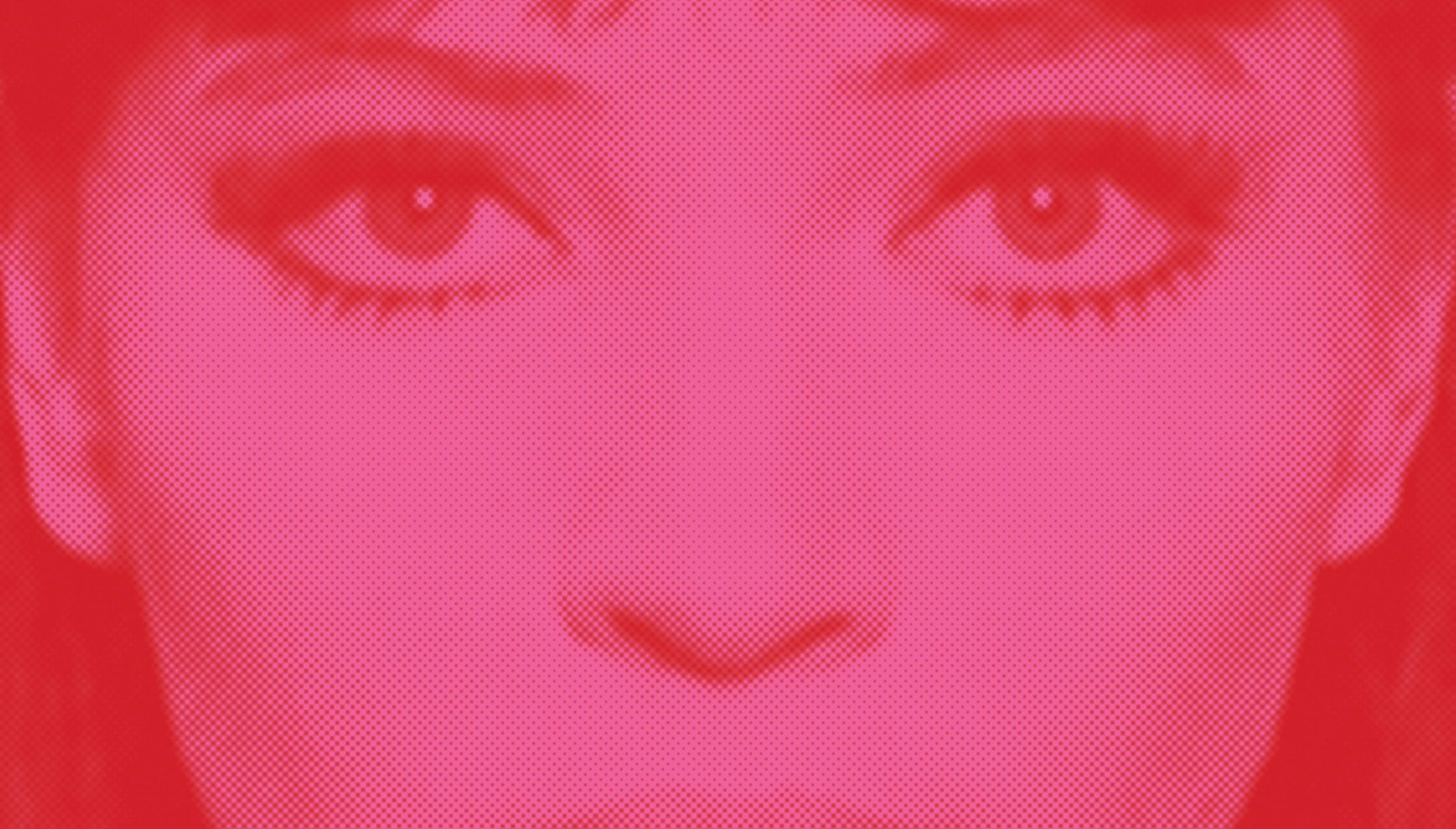
Véronica, Angéla, Nana, Odile, Natacha, Marianne…"You always end up resembling the roles you play. Or it's the role that ends up resembling you. That's possible too."
- Anna Karina on acting, including her most iconic roles with Jean-Luc Godard.
les femmes
The women in Nouvelles Femmes were more than muses of the Nouvelle Vague directors. Along with their modern presence on screen in new types of roles, off screen, they were writers, activists, poets, and directors in their own right, following in the footsteps of Agnès Varda. The book features the stories and films of:
Anouk Aimée - Brigitte Bardot - Françoise Dorléac - Françoise Fabian - Anna Karina - Macha Méril - Jeanne Moreau - Emmanuelle Riva - Jean Seberg - Haydée Politoff - Delphine Seyrig
…and many others who made the New Wave modern.

Agnès Varda
Considering the context of 1950s France, in which women faced many obstacles in directing, it is easy to see what made Varda a true pioneer. After training as a photographer, her first film La Pointe Courte (1955) anticipated the New Wave movement by almost five years, leading some to label her the mother of the Nouvelle Vague. Varda’s films escaped a generalized label, however. Each had its own identity, just like the countless faces she celebrated in them. Espousing ideals of social justice, women’s rights, and environmental awareness, Varda’s activism seamlessly flowed through her camera in her works of fiction and documentary. Her approach to filmmaking adhered to the idea of the auteur, or cinécriture, “cine-writing,” as she called it. In writing, producing, directing, and editing, her pursuit of telling her own stories required relentless determination and grit. Demanding the right to the final cut of her films illustrated her full commitment to her vision, and her choice to protect her creativity over financial gain. She serves as a role model for today’s independent filmmakers.

Macha Méril
In a recent interview, Méril spoke of the importance of film as documenting the truth: “Cinema brings us truths that no one else tells us, not even journalists or diplomats.” Starring in the title role in Godard’s Une femme mariée (1964), Macha Méril went on to become a prolific and celebrated writer. She remains an active voice in support of freedom of speech and women’s rights. On her place in the New Wave movement, she stated: “I felt like I was sort of a looking back, moving forward revolutionary, to be there, to participate in a march toward freedom, toward new forms of society, toward new forms of relationships between men and women . . . Women of the New Wave . . . were women of change, those who all of a sudden had different physiques, we weren’t all very pretty, we were real. We were closer to real women, normal women. We weren’t blow-up dolls. We weren’t stars, we weren’t ‘actresses.’ I felt that very strongly, and I felt it every instant.”

Anna Karina
Known for her collaboration with Jean-Luc Godard that revolutionized cinema with films such as Une femme est une femme, Vivre sa vie, Bande à part, and Pierrot le fou, Anna Karina also acted with other renowned directors (Jacques Rivette, Luchino Visconti, George Cukor and Tony Richardson) before writing and directing Vivre ensemble in 1973. In making her film, Karina entered a new chapter of her life, seizing her agency, finding her voice, as she stated in an interview: “I wanted to do something by myself. When you’ve been working with directors, suddenly you feel like doing something by yourself.” Karina also published four novels and wrote and performed numerous songs, including those written for her by Serge Gainsbourg for the film that bears her name, Anna, directed by Pierre Koralnik in 1967.

Jeanne Moreau
From a young age, Jeanne Moreau was determined to become an actress. While successful on stage, she struggled for years to find the same success in the cinema. Embodying the importance of encounters, her career was marked by the collaboration with directors who, instead of seeking to make her conform to a certain idea of beauty, brought out her own individuality. Breaking out with her role in Louis Malle’s Ascenseur pour l’échafaud, Moreau offered a more authentic look and style. Becoming a role model of an independent and free woman on screen through her leading role in Truffaut’s Jules et Jim, and off screen through the unconventional choices in her personal life, Moreau also went on to direct three films and began writing her life story that was published posthumously as Jeanne par Jeanne Moreau in 2024 by Gallimard.

Jean Seberg
Before incarnating the iconic role of Patricia, an aspiring journalist and modern American in Paris in Godard’s À bout de souffle, Jean Seberg was already an ambitious young woman and an activist. In high school, she was known for her support of human rights organizations as well as her acting. Determined to become a star, she entered and won a contest for the lead in Otto Preminger’s Joan of Arc and starred in her second film with him, Bonjour Tristesse that got her noticed by the French New Wave directors. Alongside acting, Seberg also wrote and directed while continuing her activism. Her involvement with the Black Panther Party led to an FBI smear campaign, a story depicted in the 2020 film Seberg where Kristen Stewart captures this fateful moment of her life off screen.

Celebrate the iconic female actors and filmmakers of the French New Wave with a compelling examination of their role as a vital part of cinema history, as well as their influence on attitudes and style in film and in society that endures to this day.
Legends of style, mystique, and individuality, actresses such as Anna Karina, Jeanne Moreau, Jean Seberg, Brigitte Bardot, and filmmaker Agnès Varda, stand out as emblems of the French New Wave who continue to fascinate audiences worldwide. Part of a larger group of “modern women” who revolutionized cinema, they broke out of the rigid representations that confined women to stereotypes and led the way toward more complex female roles. Their individual voices and undeniable presence brought authenticity to their characters that resonated both on screen and off.
Nouvelles Femmes offers a fresh take on these compelling women, illuminated by quotes from the films, directors, and, most importantly, the women themselves. Film stills complementing the narrative showcase innovations in style and illustrate behind-the-scenes moments between actresses and directors.
With accomplishments ranging from writing and directing to activism, women of the French New Wave paved the way for today’s most modern women in film and in society. Admired by cinephiles all over the world, their legacy lives on as they continue to stand as icons of one of the most innovative times in cinema. This beautifully crafted film history book captures their powerful influence and makes an essential gift for movie lovers and devotees of French film history.
-
The French New Wave, one of the most influential movements in film history, first arrived on the scene as a foundational shift in French society. A new generation of young people coming of age after World War II began to shake the established order, reshaping values, morals, roles, and relationships between women and men. Their progressive thinking revolutionized the cinematic landscape, guided by young directors whose philosophy and aesthetic celebrated personal style and authenticity. New images of female characters represented a palpable break with the past. Off screen, women were enjoying more freedom while still caught between the conflicting messages of a society grappling with rapid evolution. These new women, these nouvelles femmes, suddenly saw their complexities reflected on screen: the roles and the actresses who inhabited them were, in a word, modern.
-
If many New Wave films still depicted women through the lens of male fantasies, they also brought about freer, more independent images of women with individuality and some amount of agency. In Truffaut’s 1957 short Les Mistons (The Mischief Makers), Bernadette Lafont encapsulated the duality of embodying a pinup in the eyes of the young boys (the young “rascals” or “brats” of the title) spying on her (as well as Truffaut’s camera), and, at the same time, a free and free-spirited woman as she rides through town on her bicycle.
The film was adapted from Maurice Pons’s novel of the same name and foreshadows Truffaut’s alter-ego troublemaker Antoine Doinel in Les Quatre cents coups. In the south of France, a group of adolescent boys follows Lafont’s character around, transfixed by her power, fascinated by her body and her relationship with a young French soldier (Gérard Blain) on leave from his military service. Like Bardot min Et Dieu créa la femme, Lafont in Les Mistons reflects the tension of an emerging feminine agency, translated by the bicycle, in the context of a cinematic and societal tradition of objectifying women through the narrator’s gaze, the director’s lens. The film opens with a long tracking shot of Lafont riding her bicycle toward the camera before it pans over to reveal the young boys gazing at her from afar as a literary voice-over narrates the story: “Jouve’s sister was unbearably beautiful. We couldn’t take it. She always rode with her skirt flying, and without a slip. Bernadette led us to discover many of our darkly hidden dreams. She awoke in us the springs of luminous sensuality.”
-
FROM STAGE TO SCREEN: ACTING AS ESCAPE AND REBELLION
“With the nose you have, you’ll never be able to act in tragedies.” So said a director to Jane Fonda, as she later recount-ed to Delphine Seyrig in Sois belle et tais-toi, implying that she would never be taken seriously because of her appearance. Fonda was advised instead to dye her hair blonde and break her jaw to look more chiseled. Seyrig’s documentary centered on women’s experiences in the film industry, the title playing off Marc Allégret’s 1958 film of the same name. Seyrig provided her fellow actresses a voice that had largely been ignored. Fonda, along with other American and French actresses, went on to describe being scrutinized and judged in ways that were extremely alienating.Too tall, too dark, cheeks too chubby, breasts too small, nose too big—all remarks that women endured, and often internalized, in order to be in the movies. The story of Moreau being deemed unphotogenic by the director of photography in her first film is legendary. These assessments could be seen as a sort of necessary evil in terms of film being an industry, of actors being a commercial product in which investors need to calculate returns as they choose which films or actors to support. However, the mechanisms at work also bleed over into the larger population now just as they did then. In a vicious circle, women are given “role models” in film, literature, and other media that tell them what is valuable, markers that they must hit to feel valuable. Assessing themselves according to what they see on screen, women try to conform to those images, ones that, until recently, were largely imagined by men, and created by a long and complex cultural history.
-
After their revolutionary cinematic work in the French New Wave, many of the actresses and women associated with the movement furthered their careers on screen and off. Some became authors, directors, or activists—many did all three. Vast in scope and influence, the New Wave also employed countless competent and dedicated women too often unrecognized for their contributions to the success of an enterprise. This chapter is a celebration of some of the endeavors of women who were a part of this exceptional moment in film history, the French New Wave.
-
Reframing the women of the French New Wave shines a light on these concerns and provides a measuring stick for steps forward as well as steps back. We can appreciate the new voices brought to the screen by Anouk Aimée, BrigitteBardot, Françoise Dorléac, Françoise Fabian, Anna Karina, Macha Méril, Jeanne Moreau, Emmanuelle Riva, Jean Seberg, Haydée Politoff, Delphine Seyrig, and Agnès Varda, as well as others like Bulle Ogier, Jane Birkin, Romy Schneider, and their contemporaries. We remember the actresses’ en-counters with directors who helped create more authentic images of them. Their films changed the ways women could see themselves off screen as well, with the promise of more agency.